Built for 1984
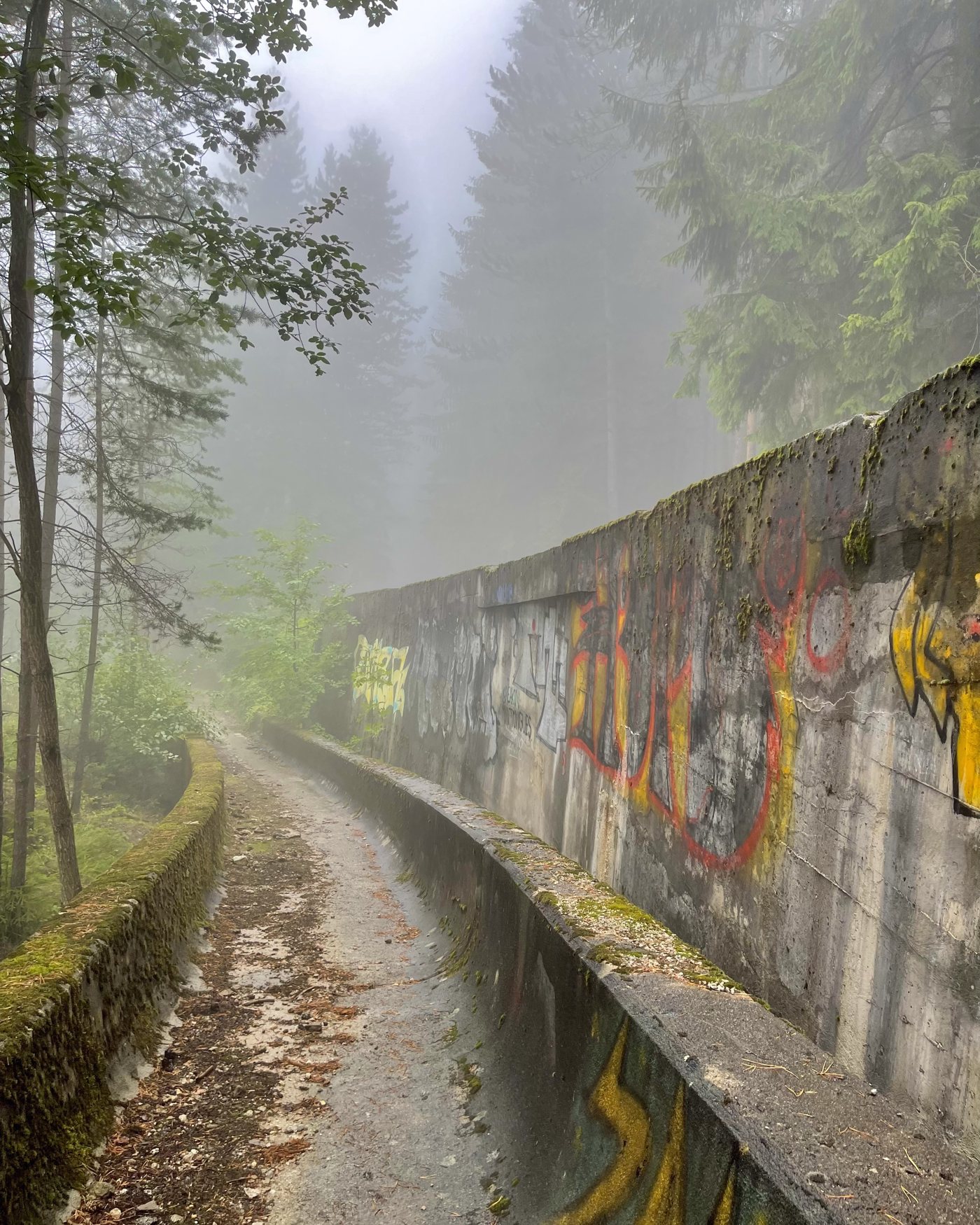
Sarajevo, then part of Yugoslavia, was awarded the 1984 Winter Olympics in 1977, beating Sapporo and Gothenburg. A new bobsled and luge track was planned for Mount Trebević, the mountain that rises straight up from the city's old town.
The design was approved in 1981, and construction ran from June 1981 to September 1982. The finished run was about 1,300 meters long, with 13 banked curves and a drop of about 126 meters from start to finish.
Its first big event was the 1983 European Bobsleigh Championships. At the Games in February 1984, around 20,000 spectators watched the luge and around 30,000 the bobsled. The Games' mascot, a friendly wolf named Vučko, is still a beloved symbol of the city.
From sports venue to front line
After the Olympics, the track hosted international races until war broke out across Yugoslavia in 1991. In 1992 the siege of Sarajevo began, and it went on to become the longest siege of a capital city in modern history.
Trebević's slopes look straight down onto the city. During the siege the mountain was used for artillery and sniper positions held by Bosnian Serb forces, and the track itself was heavily mined and used as an artillery position. The original cable car, which had carried Sarajevans up the mountain since 1959, was destroyed.
Mines, then graffiti
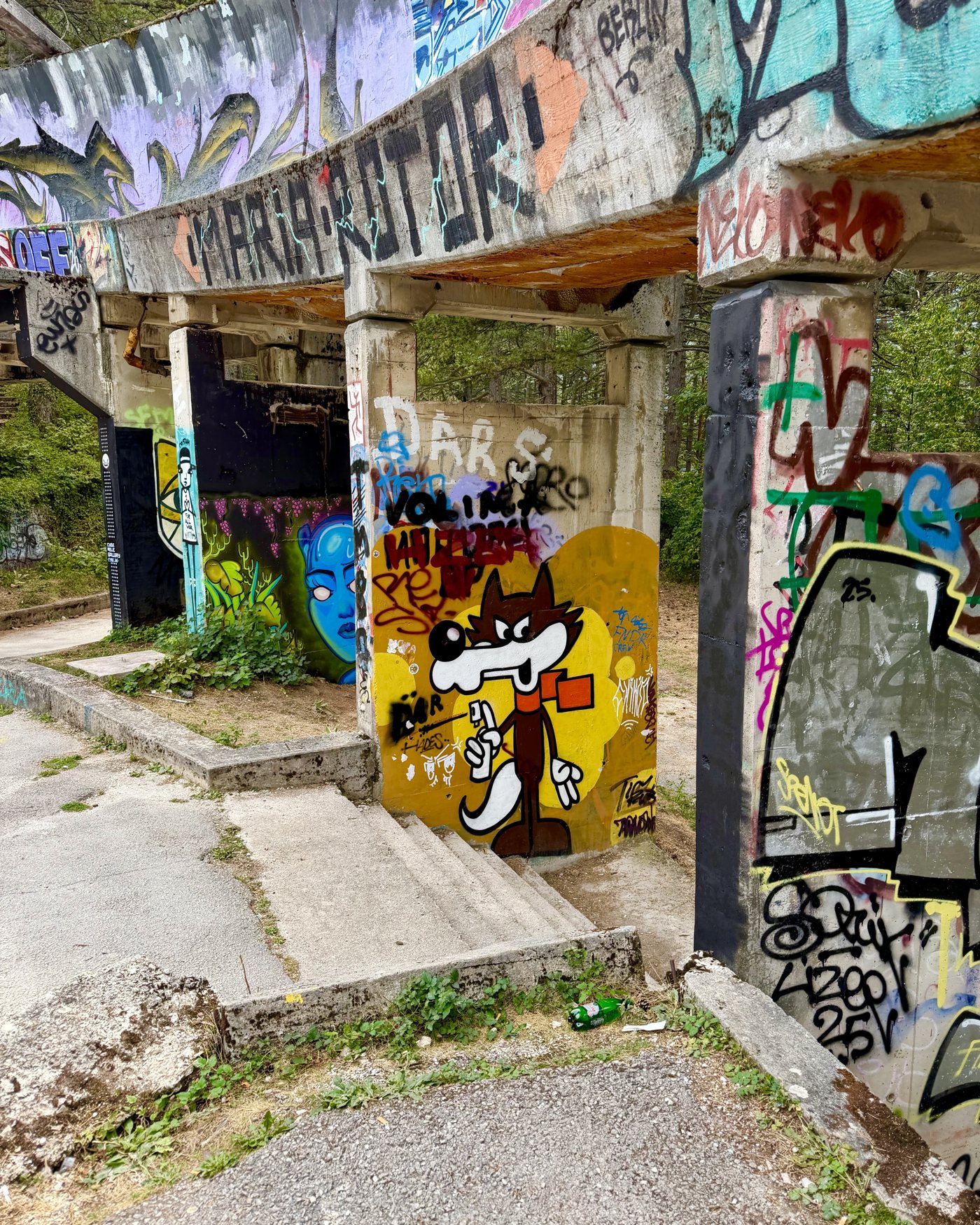
After the war, clearing the mountain took more than 15 years and thousands of mines and pieces of military debris. Trebević was declared a protected area in 2014 and reopened to the public in 2017.
Since 2014, the ZOI'84 Olympic Legacy Foundation, volunteers and the national bobsleigh federation have worked to restore parts of the track, helped by a grant from the International Luge Federation. It still isn't fit for official races, but it is used for summer luge training and by mountain bikers.
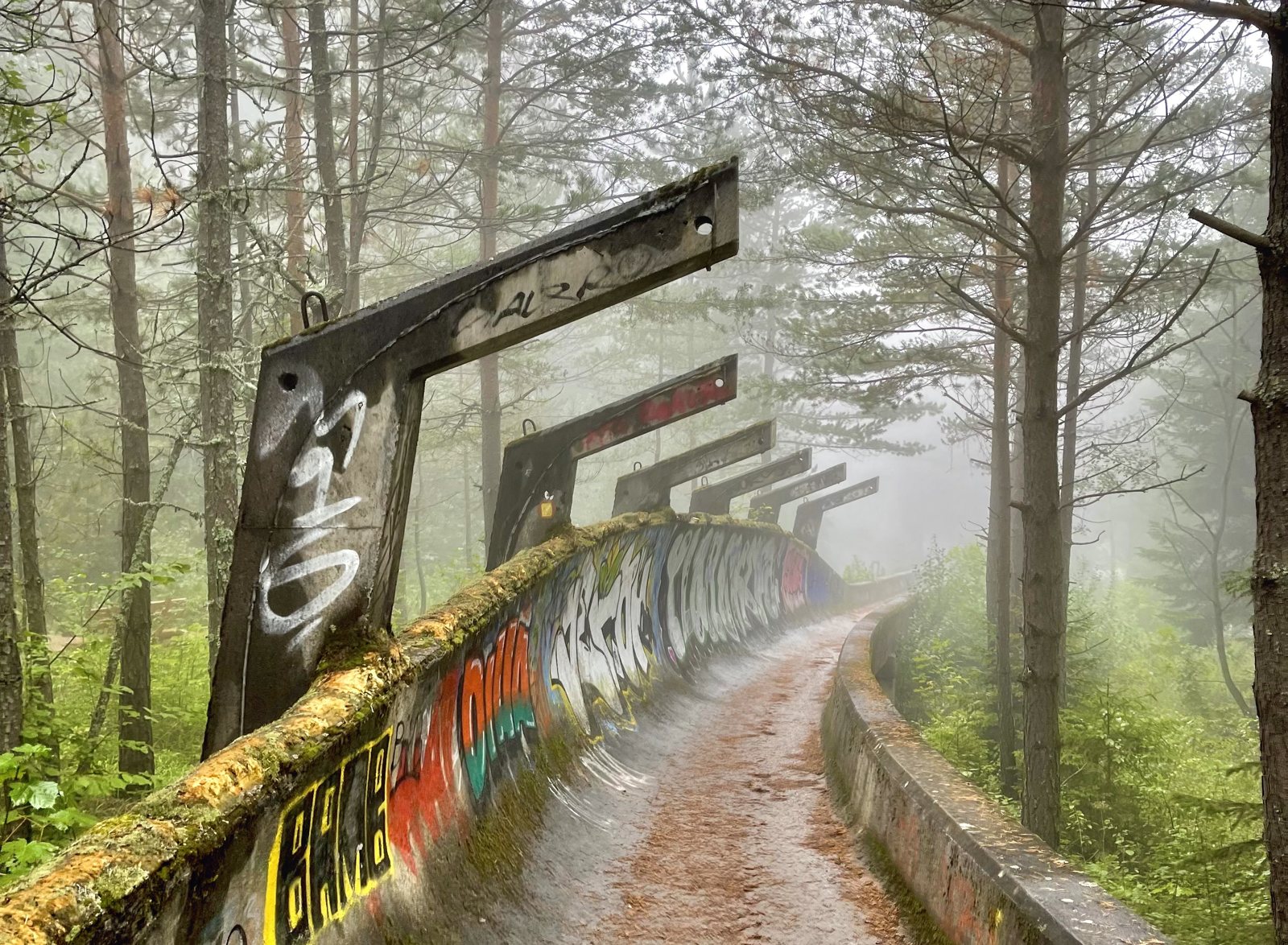
Meanwhile, graffiti artists have covered nearly every curve. The art has turned the track into one of Sarajevo's most photographed sights, and a strange, beautiful mix of Olympic history, war history and street art.
The cable car back up
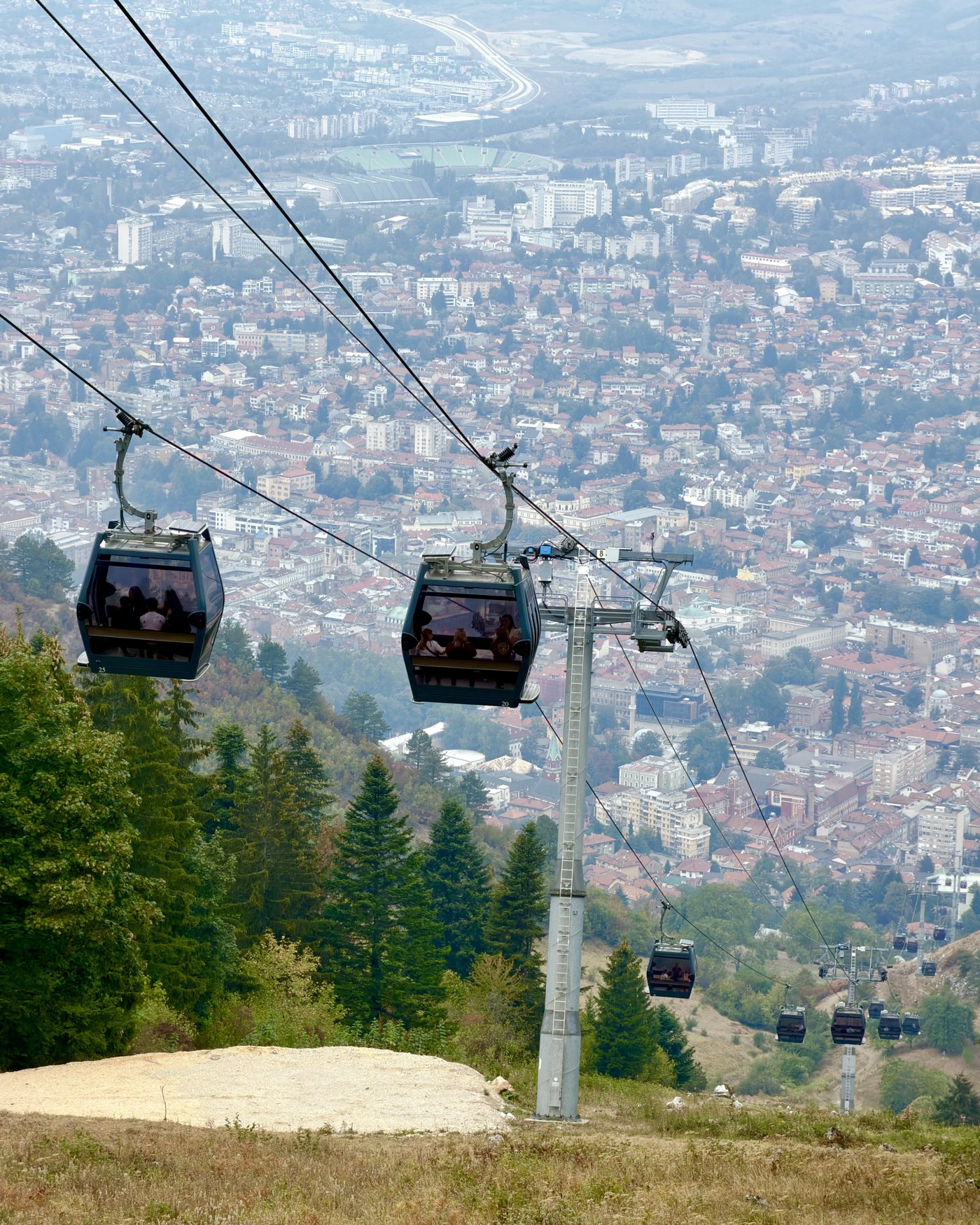
The Trebević cable car was rebuilt in 2017 and 2018 and reopened on April 6, 2018, Sarajevo's City Day. Its 33 cabins carry up to 1,200 people an hour, and the ride takes about nine minutes each way.
Walking it ourselves
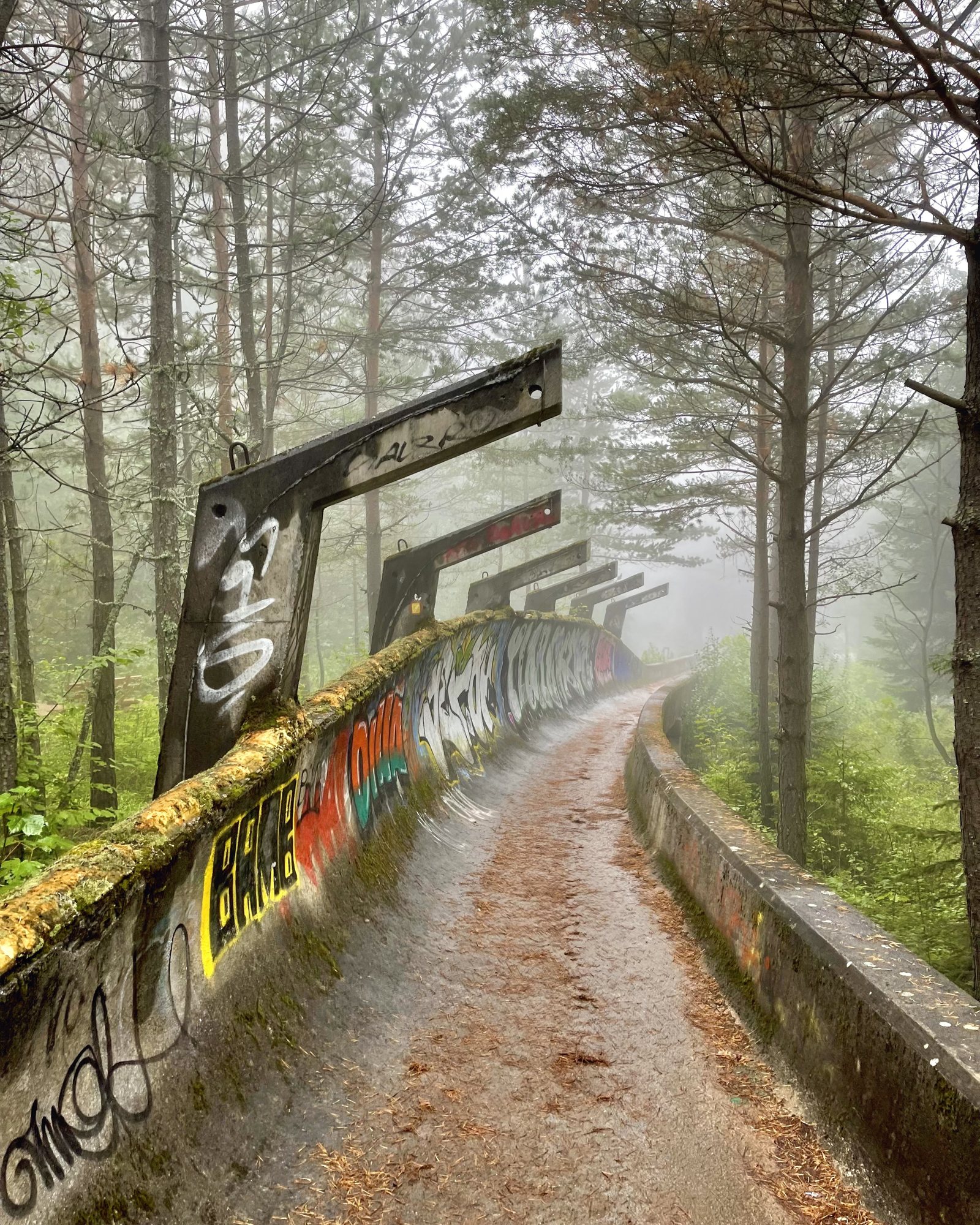
We rode the cable car up on a foggy September morning and spent the morning on the forest trails and walking the track. In the fog, the concrete curves seemed to disappear into the trees, with the graffiti glowing out of the gray.
Back at the bottom, the small War Museum 1992 Sarajevo, a few steps from the lower cable car station, tells what the siege meant for the people of the city. It is worth the visit before or after the mountain.