A woman with no real name
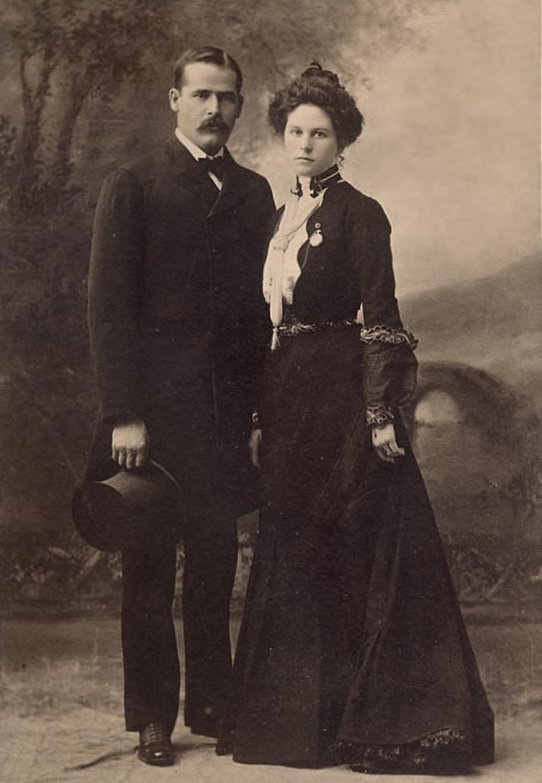
Nobody knows who Etta Place really was. Not her birth name, not where she came from, and not what became of her. The Pinkerton detectives who hunted the Wild Bunch called her Ethel, Eva and Rita at different times before settling on "Etta Place" for their wanted posters.
Guesses at her birth year run from about 1878 to 1883, and theories put her birthplace in Utah, New York, Pennsylvania or Wisconsin. What we do have is the studio portrait on this page, taken in New York in 1901 and one of only two known images of her, standing beside Harry Longabaugh, better known as the Sundance Kid. A Pinkerton description summed her up as "a refined type."
The Outlaw Trail
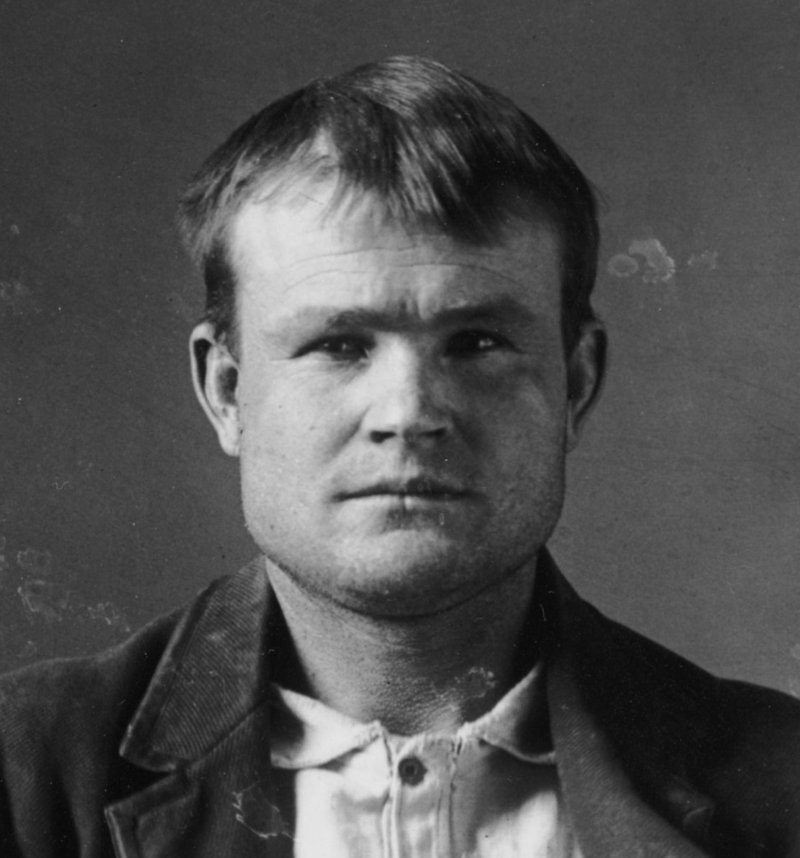
Butch Cassidy was born Robert LeRoy Parker on April 13, 1866, in Beaver, Utah, and grew up on a ranch near Circleville, Utah. As a teenager he fell in with an older rustler named Mike Cassidy and later borrowed his name.
By the mid-1890s Cassidy led the Wild Bunch, a loose gang of bank and train robbers that included Sundance, Elzy Lay, Harvey "Kid Curry" Logan and Ben Kilpatrick. They moved along what became known as the Outlaw Trail: a chain of remote hideouts and friendly ranches running from Montana down toward Mexico, where a rider could rest, swap horses and disappear.
The most famous stop sat just east of here. Robbers Roost is a maze of canyons between the Green, Colorado and Dirty Devil rivers, east of Hanksville. The gang holed up there after an 1889 bank robbery in Telluride, Colorado, and again after the April 1897 payroll robbery at Castle Gate, Utah. The Pinkerton detective Charlie Siringo later wrote that the outlaws there used twenty-dollar gold pieces as poker chips.
Hideout country
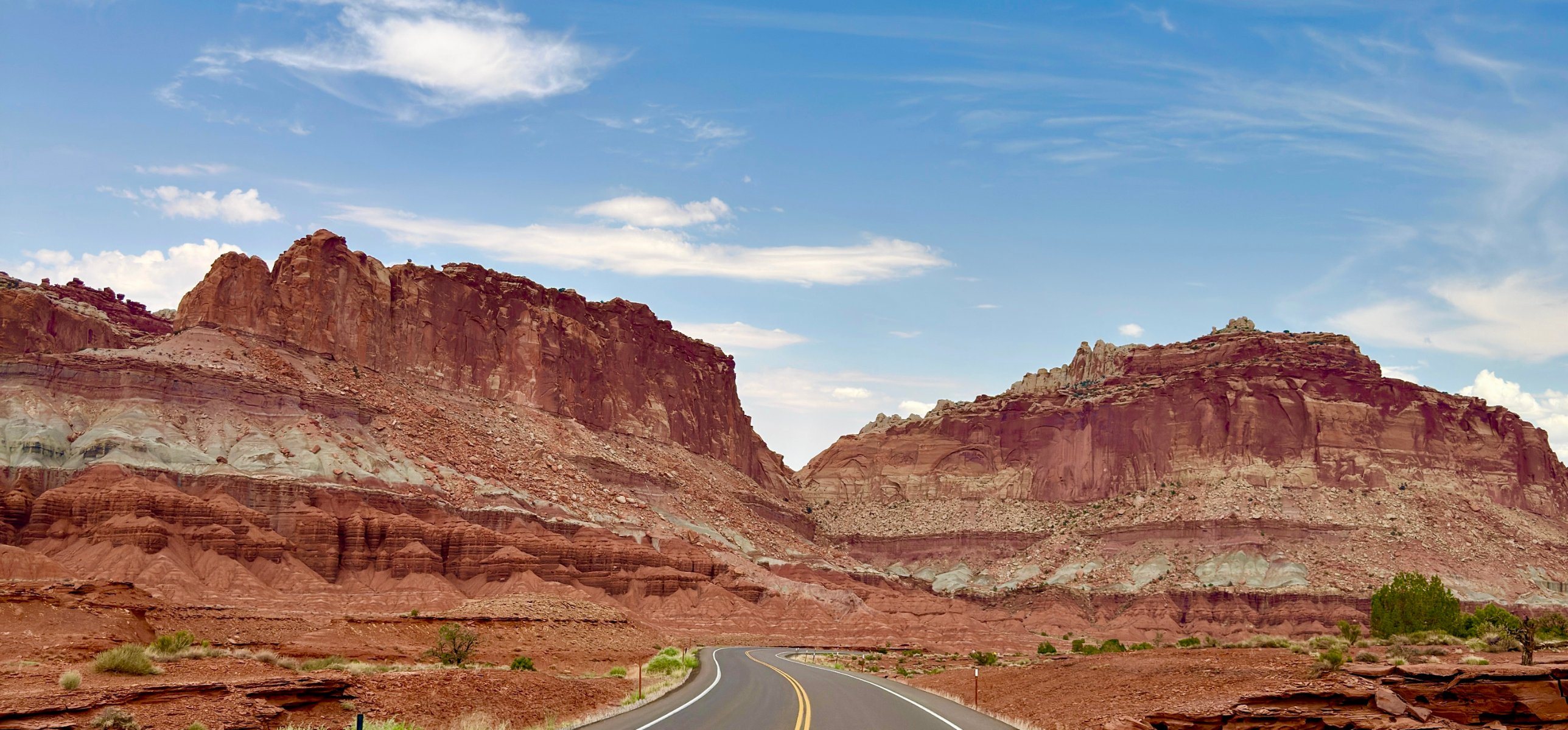
The canyons of Capitol Reef were part of that world. Local tradition holds that Cassidy and his gang passed through in the 1890s, and the park's Cassidy Arch, high above Grand Wash, is named after him. Grand Wash itself, a narrow canyon that opens onto Highway 24, is often described as one of the gang's hiding spots.
One more twist: the man who did the most to write down these stories ended up running the park. Charles Kelly published The Outlaw Trail, an early history of Cassidy and the Wild Bunch, in 1938, and later became Capitol Reef's first superintendent.
New York, then Patagonia
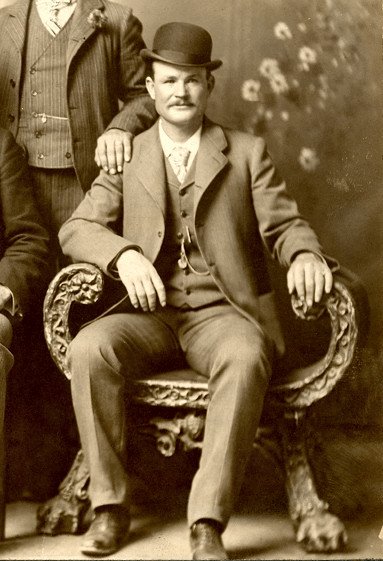
By 1901 the law was closing in. In February, Sundance and Etta were in New York, where they shopped at Tiffany's and sat for that famous portrait. On February 20 they sailed for Buenos Aires aboard the British ship Herminius, with Cassidy posing as her brother, "James Ryan."
They settled in the Cholila Valley in Argentina's Chubut Province, on a ranch with a four-room log cabin beside the Rio Blanco, and for a few years they lived quietly as ranchers. Etta and Sundance made at least two trips back to the United States. Then in 1905 a bank robbery in southern Argentina was blamed on them, and the trio sold the ranch and moved on.
Vanishing act
In 1906 Etta had had enough. Sundance took her back to the United States, most likely to San Francisco, and returned to South America alone. In November 1908, after a mining payroll was robbed near San Vicente, Bolivia, soldiers surrounded two American bandits in a boarding house. Both died. Most historians believe they were Butch Cassidy and the Sundance Kid, though the bodies were never positively identified.
Etta's trail goes cold almost at once. In 1909 a woman matching her description asked the U.S. vice consul in Antofagasta, Chile, for help getting Sundance's death certificate, then never came back. After that there are only theories: that she settled in Texas, returned to New York, moved to Paraguay, or married a famous boxing promoter. None has ever been proven.
Etta in Torrey today
Torrey, the gateway town to Capitol Reef, has leaned into its outlaw history, and Etta Place Cider is the best example. Ann Torrence and Marc Roberts planted apple trees on their land near the Fremont River and opened the cidery in 2021. It now grows more than 500 trees and about 90 apple varieties, carrying on the orchard tradition that pioneers started in nearby Fruita in the 1880s.
Its tasting room sits right on Highway 24 at the west end of town, the same road our drive follows from Torrey into the park. The cidery's own telling of the legend says Etta was one of only five women ever to visit Cassidy's hideout east of Torrey. Whether or not she ever saw these canyons, it is fitting that the one outlaw who seems to have made a clean getaway is the one with her name on a bottle.